Category: philosophy

  • Greenspace cause and effect …

    Greenspace cause and effect …

    There was a “movement” in the 1990s inspired by Robert Bly’s book Iron John: A Book About Men that involved “wilderness retreats.”

    I’m not sure about the specifics – drum circles and chanting were involved. To me it sounded a little like “Boy Scouts” for adults – but that isn’t important.

    For what it is worth – The Boy Scouts of America were founded in 1910 and were much more concerned with “character building” than “connecting with nature.”

    Of course most folks still lived in “rural” areas in the United States until around 1920. The 1920 census showed that 51.2% of the U.S. population (~54 million people) lived in urban areas, while 48.8% (~52 million people) lived in rural areas.

    The industrial revolution had been motivating the shift from rural to urban for 40 years by then. If you live and work on a farm – “nature” is something you deal with on a daily basis. A “break from the ordinary” for those folks would have been a trip to the big city …

    Health Benefits …

    There has (probably) been the perception that “country living” was “healthier” than “city living” for over 1,000 years. World history can be framed as “city” vs “farm” – which is usually a, either/or logical error. Human history isn’t a story of city OR farm – but city AND farm. Those folks living in the city need the agricultural products those farm produce – and those farmers need the city as a market for their produce.

    It is easy to forget that for MOST of human history the “average person” was a subsistence farmer. Those subsistence farmers would also have been mostly illiterate – so they didn’t leave a lot of manuscripts for historians to examine.

    The reality of subsistence farming is that starvation is just a crop failure away – but again if the crops fail, those city folks are also staring starvation in the face …

    It is interesting to point out that Thomas Jefferson’s vision for the future of the United States was a collection of yeoman farmers. His theory was that the “independent landowner who cultivates his own family farm” would be less prone to corruption. BUT his theory revolved around the the yeoman farmer being morally superior to the “city dweller” – i.e. “public health” wasn’t his concern …

    Under the category of “just me guessing” – poor sanitation and infectious diseases would explain MOST of the perception of country life being “healthier” than city life . The stereotype of the “well to do” 100+ years ago would include a “country home” where they could escape the heat and stench of the “big city”.

    BUT is modern city living inherently LESS healthy than “country living?” Well, the answer is “it depends” – i.e. there are a large number of other factors involved.

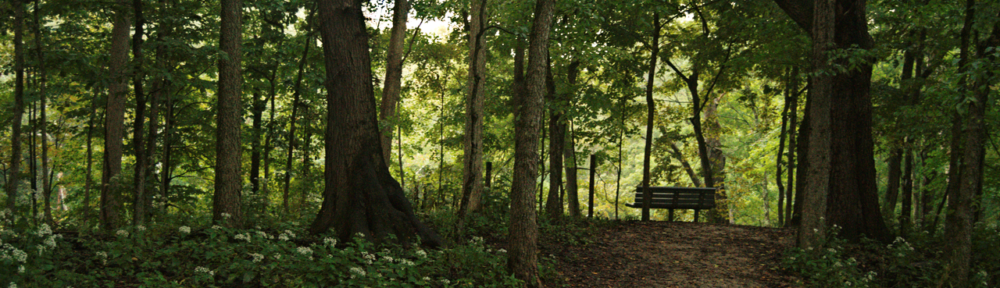
    Greenspace …

    I’m told that “Forest bathing” has been a thing is Japan since the early 1980s.

    Google tells me:
    “known as shinrin-yoku in Japanese, is a nature-based wellness practice that involves immersing your senses in the atmosphere of a forest to improve mental and physical health. Literally translating to “absorbing the forest atmosphere,” the practice does not involve physical swimming or bathing; rather, it is about slowly and mindfully connecting with nature.”

    Now, trying to separate “mental” and “physical” health is impossible – so I won’t try.

    What I’m curious about is the cause and effect public health benefits of “greenspace.”

    The is (probably) a direct correlation between the amount of “greenspace” and and a large number of societal ills. With the obvious “statistics 101” response being that correlation never equals causation.

    I am willing to believe that “a walk in greenspace” or forest bathing has positive mental and physical benefits. Would more “greenspace” improve public health?

    Well, the answer is “it depends.”

    Consider that Andrew Carnegie (once the richest man in the world( helped build 2,509 libraries between 1883 and 1929. Mr Carnegie would pay for construction and the municipality had to commit to “commit public funds (usually 10% of the building’s cost per year) to maintain, operate, and stock the library with books” (thank you Google/Wikipedia).

    The same idea would apply to building “greenspace.” Building the park is only half of the problem – the park has to be maintained.

    IF the community is willing to invest the resources to maintain the greenspace then that is an investment in the community THAT would be much different than greenspace funded by “not the local community”

    Just like building a library won’t automatically improve literacy – building greenspace won’t automatically improve public health.

    Yes, more greenspace would most likely correlate to better public health – but the CAUSE of the improvement would be the shift in community values that prioritized the building and maintenance of that greenspace. Just building a park that goes unused and is abandoned after a few years will do nothing positive for public health.

  • “Customer service”

    … a well trained “customer service representative” (CSR) – when dealing with a “customer” – will never use the phrase “I’m busy” or “I don’t have time”

    first of all the customer doesn’t REALLY care – they are contacting “customer service” because they had a problem, the fact that the occasional individual CSR is new (and learning) or is just incompetent becomes another hurdle to overcome in getting “problem fixed”

    the “good customers” will politely wait (because yelling at the CSR ain’t gonna make things happen faster) – but the chances of that customer leaving/switching/never coming back will increase if the “customer service experience” is bad enough

    NOW if the “cost of switching” is zero (0) and customer service is “bad” then that means that “customer loyalty” will be non-existent

    Business plans

    if the “business” in question operates on high volume and low profit margins – then the amount of “customer service” is guaranteed to be “low”

    this is by design – think “big box store” – they have low prices, but getting “help” will be a challenge. Which isn’t necessarily a problem – as long as “customer expectations” are still met – i.e. I don’t EXPECT a high level of service when I go to “big box store”

    still – CSR’s should be trained to actually be helpful and polite – “helpful and polite” goes a long way (and yes, sometimes the customer IS the problem – still “helpful and polite” is the best option)

    BUT the other end of the business plan spectrum is “low volume and high profit margins” — think “luxury brands” – e.g. someone can buy a watch/jewelry at Walmart or Tiffany’s but the “customer expectations” will be totally different

    of course at “luxury brand” the CSR to customer ratio might be close to 1:1 – the customer is paying a lot more, so they expect a lot more

    Personal Brand Building

    THEN somewhere in the middle are folks trying to build an “influencer”/”artist” brand of some kind. Again the terms “I’m busy” or “I don’t have time” aren’t going to be in the competent influencer’s vocabulary.

    Well, if the influencer wants to minimize the effort and lower the value of their “personal brand” – then of course tell everyone how busy you are, and that you don’t have time to interact with lowly peons like “fans.” (yes, that is sarcasm)

    WHY? well – assuming the customer isn’t a sociopath they will understand the the influencer/artist is “busy” and has time constraints – responding with “I’m busy” gets interpreted as “your concern/request is not important and/or valued” – and “I don’t have time” just comes across as “go away, you’re bothering me”

    umm , and if the customer IS a sociopath – well, that is why the modern world is kinda scary sometimes. Be polite, but also be careful …

    again, this is from a “business” non-intimate interpersonal communication point of view — if someone you have known for years tells you they are “busy” and can’t do “whatever” it PROBABLY means they respect you enough to be honest – i.e. they ARE busy, and offers to help might be appreciated but aren’t practical

    oh, and the “signal to noise” ratio for that hypothetical influencer/artist should heavily favor the “signal” side – i.e. “useful information/entertainment” should heavily outweigh requests to join their various paid subscription options.

    STILL “helpful and polite” go a long way.

    Yes, there are countless real (and AI generated) artists out there trying to build a personal brand. Well managed “automatic responses” can be extremely useful – but they shouldn’t become a replacement for REAL “customer engagement”

    the various “comic cons” become great case studies for real world brand management and “fan engagement” – “fans” are not only willing to stand in line to meet “celebrity” they pay for the privilege of a brief interaction.

    The classic example of “fan engagement” is still athletes signing “whatever” for fans – again, folks willing to wait in line for a brief interaction.

    BUT in both “comic con” and “athlete autographs” the “brand” has been built by the actor/athletes performances.

    If the “brand” is a tree – then “fans” are the fruit of the tree – and “fan engagement” becomes an exercise in meeting expectations.

    Oh, and “come see me in person” has been a good business plan since Mark Twain’s time.

    Did I have a point?

    well, no.

    The joke about “agents” is that when they say “trust me” what they mean is “f*** you” – and when “customer management” says “I don’t have time” or “I’m busy” what they mean is “you should go somewhere else where they value your time and business”

    ’nuff said

  • Talpa caecior.

    Blinder than a mole. The ancients thought moles had no eyes, but they have two small eyes, affording them so much sight, as to enable them to know when they have emerged through the earth, and they no sooner perceive the light, than they return into their burrows, where alone they can be safe. This proverb is applied to persons who are exceedingly slow in conceiving, or understanding what is said to them ; also to persons searching for what lays immediately before them. ” If it was a bear,” we say, ” it would bite you.” To the same purport is

    Leberide caecior.

    By the leberis, the Latins meant the dry and cast skin of a serpent, or of any other animal, accustomed to change its coat, in which the apertures for the eyes only remain. With us, it is usual, in censuring the same defect, to say, ” He is as blind as a beetle.” “We are all of us used to be Argus’s abroad, but moles at home,” but how much better would it be to correct an error in ourselves, than to find an hundred in our neighbors.

    (once again – commentary from Dr. Bland – 1814)

  • Nullus illis Nasus est, et, obesae Naris Homo

    They have no nose, or they would have smelt it out. They are dull, heavy, stupid, void of ingenuity or sagacity. “Emunctae naris homo,” that is, he is a man of a clear head, of quick sense, and sound judgment.

    The sense of smelling has perhaps been taken, preferably to any of the other senses, though they are all occasionally used, to denote the perfection or imperfection of the understanding, from observing the different value that is put upon dogs, in proportion as they have this sense more or less perfect.

    “Olet lucernam,” it smells of the lamp, is said of any work on which much pains have been bestowed to make it perfect.

    “Mener par le nez,” to lead any one by the nose ; or, to have such influence over him, as to make him say, do, or believe, whatever we please.

    (once again Dr Bland and Erasmus)

  • Manum nonverterim, Digitum non porrexerim

    Are Latin phrases used to express the most perfect supineness and indifference on any subject, and which we have adopted : ” I would not give a turn of my hand, or hold out a finger to obtain it,” or, “I value not a straw what such a person may say of me,” or, ” there is not the turn of a straw difference between them.”

    (Erasmus via Dr Bland)

  • Sero sapiunt Phryges

    The Trojans became wise too late ; they only came to their senses, when their city was on the eve of being taken. Exhausted by a war of ten years, they then began to consult about restoring Helen, on whose account the contest had been undertaken.

    The adage is applied to persons, who do not see the advantage of any measure or precaution until it is too late to adopt it, and is similar to, “when the steed is stolen, we shut the stable door,” and to the following of the Italians, and the French, ” Serrar la stalla quando s’ han perduti i buovi.” “II est tems de fermer l’etable quand les chevaux en sont alle.”

    (editorial – lightly edited from

    Proverbs,
    Chiefly Taken From The Adagia Of Erasmus, With Explanations;
    And Further Illustrated By Corresponding Examples From The Spanish, Italian, French & English Languages.

    By Robert Bland, M.D. F.S.A.

    Vol 1 1814

    I’ve been guilty of just copy and pasting without attribution – anything in the “Erasmus” category is from the 1814 book by Robert Bland)

  • Medice, cura te ipsum

    Physician, heal thyself. It seems but just, that those who profess to cure the diseases of others, should, as a pledge of their capacity, be able to preserve themselves, and families, from the ravages of them. But how few are able to give this pledge!

    Practitioners in medicine, are neither more remarkable for longevity, nor for producing or rearing a more healthy, or a more numerous progeny, than those who are out of the pale of the profession. This, however, does not arise from the fault of the physician, but from the imperfection of the art ; for though there is no branch of science that has been cultivated with more diligence, than this of medicine, or that has had the advantage of being practiced by men of greater genius, abilities, and learning, or who have labored with greater industry, perseverance, and zeal, to bring it to perfection; yet they have been so far from attaining their object, that there are many diseases, and among them, some of the most frequent, formidable, and fatal, for which no adequate, or successful methods of treatment, have been discovered.

    The treatment of rheumatism is at this time as various, unsettled, and generally as inefficient, as it was 2000 years ago ; and although so many volumes have been written on asthma, and consumption, it is to be lamented that no satisfactory proof can be given, that either of them were ever cured by medicine. Much might, perhaps, be clone towards the improvement of the practice, if physicians would follow the model which the late Dr. Heberden has left them in his Commentaries ; in my judgment, one of the best books which this, or any other age, or country, has produced on the subject.

    The College of Physicians have done something towards leading practitioners to this mode, by abolishing the vain titles heretofore given to drugs and compositions, attributing to them qualities which experience by no means warrants us in believing they possess. But even in the complaints mentioned above, and many more might be added, the physician may be often able to give directions that may retard their progress, and enable the patient to pass his life with some degree of comfort; and he who limits his endeavors to procuring these advantages, will well deserve their grateful acknowledgments, he will also escape the censures so frequently thrown on the professors of the art.

    “Turba medicorum perii,” a multitude of physicians have destroyed me, was the inscription the Emperor Adrian ordered to be put upon his monument. It would be useless, perhaps in some degree mischievous, to recite the many sarcastic speeches that have been recorded to degrade the practice of medicine. The effect they should have, and which, indeed, they have had on the more judicious practitioners, is not, on every occasion, to load their patients with drugs, which, when not absolutely necessary, deserve a different name than that of medicines. With no great impropriety they may be called poisons; for, although they may not kill, yet if they nauseate, and destroy the tone of the stomach, and have the effect of checking and preventing the powers of the constitution in their efforts to expel the disease, they cannot fail of doing much mischief.

    Baglivi, addressing himself to young practitioners, says, “Quam paucis remediis curantur morbi ! Quam pi u res e vita tollit remediorum farrago!” and Sydenham advises, in many cases, rather to trust to nature, it being a great error to imagine that every case requires the assistance of art.

    It should be considered, that as there are some diseases for which medicine has not yet found out any cure, there are others for which no medicines are required, the constitution being of itself, or only aided by rest, and a simple and plain diet, sufficient to overcome them.

    The French therefore say, with much good sense, “Un bouillon de choux fait perdre cinque sous au medecin,” a mess of broth hath lost the physician his fee. That this adage is ancient may be concluded from the smallness of the fee assigned to the doctor. The Undertaker, in the Funeral, or Grief a-la-mode, among his expenses, mentions ten pounds paid for a Treatise against Water-gruel, “a damned healthy slop, that has done his trade more mischief,” he says, ” than all the faculty.”

    The Spaniards on this subject say, ” Al enfermo que es vida, el agua le es medicina,” the patient who is not destined to die, will need no other medicine than water : such is their opinion of the efficacy of abstinence.

    ” It is no less disgraceful,”” Plutarch says, ” to ask a physician, what is easy, and what is hard of digestion, and what will agree with the stomach, and what not, than it is to ask what is sweet, or bitter, or sour.” Our English adage, which is much to this purport, and with which I shall close this essay is, ” Every man is a fool or a physician, at forty.”

  • Frigidam Aquam effundere.

    “To throw cold water on a business,” to retard its progress by idle scruples, or by more than necessary caution, is at least the manner in which the phrase is used by us. As few great actions can be achieved without some danger, or any work of eminence performed without hazard, to magnify these and to suppose them to be inevitable, because they are possible, is to check the progress of invention and improvement in the world.

    “Chi troppo s’assottiglia, si scavessa,” who refines too much concludes nothing, or who makes himself too wise, becomes a fool.

    “He that regardeth the wind, shall not sow; and he that looketh at the clouds shall not reap ;” the face of the sky not affording certain signs, indicating that the weather will continue for a sufficient space of time favorable to those operations : we therefore say, ” nothing venture, nothing have:”

    “Our doubts are traitors,
    And make us lose the good we oft might win,
    By fearing to attempt.”

  • Veritatis simplex est oratio

    Truth needs not the ornament of many words, it is most lovely then when least adorned. There are circumstances, however, in which art may honestly be used ; when we have any afflicting news to communicate, it is often necessary to prepare the mind for its reception by some general observations : or when we would persuade a person to do what we know to be unpleasant, but which we believe would be ultimately to his advantage; or would recall him from courses or connections, we believe to be injurious to his fame or fortune. In these cases a blunt declaration of our intentions would defeat the proposed end, and we must have recourse to a little art and management to engage the attention of the persons whom we wish to persuade.

    The proverb is opposed to those who. by a multiplicity of words, endeavor to obscure the truth, and to induce those they converse with to entertain opinions very different to what they would have formed, if the story had been told in a plain and simple manner.

    Two architects having offered themselves as candidates to erect a public building at Athens, the one described in a florid and ostentatious manner, all the parts of the building, and with what ornaments he would complete it ; when he had finished, the other only said, ” My lords, what this man has said, I will do.” He was elected.

  • Mustelam habes.

    You have a weasel in your house, was said to persons with whom everything turned out unfortunate and perverse. To meet a weasel was considered by the ancients as ominous, and portending some misfortune about to happen.

    Among huntsmen in this country, Erasmus tells us, it was in his time deemed an ill omen, if any one named a weasel when they were setting off for their sport.

    Theophrastus, in his description of the character of a superstitious man, says; “If a weasel crosses the road he stops short, be his business never so pressing, and will not stir a foot till somebody else has gone before him and broke the omen; or till he himself has weakened the prodigy by throwing three stones.”